Table of contents
With everything happening in our country right now, many people are exhausted, their inner reserves almost depleted. To restore them, it’s worth resting and relaxing. But what to choose — a café, or lounging on the couch with a gadget? The best option is active leisure that delivers a maximum of emotions. One of the most vivid ways to get a powerful hit of adrenaline without unnecessary risk is flying in a wind tunnel — and you can buy a certificate for this experience at AIRMAN at an affordable price. This unique attraction lets anyone feel the real freedom of free fall without ever climbing high into the sky. But how does a wind tunnel actually work? That’s the question everyone who dreams of flying asks.
What is a wind tunnel
A wind tunnel is an ultra-powerful vertical simulator that fully recreates the sensation of a long parachute jump. Visually, the structure resembles a large transparent glass or plastic column (the flight chamber) inside which a person can literally hover in the air. Such constructions were once used to research and test how bodies behave in flight. A little later, “the tunnel” began to be used by skydivers and experienced athletes. About two decades ago this trainer became available to everyone. In other words, the “wind tunnel” attraction is a chance to feel like a “free bird” — and the AIRMAN club will gladly help you do it.

The wind tunnel: how it works
This trainer is based on the laws of physics and aerodynamics. The tunnel is equipped with powerful fans that create a dense, continuous vertical airflow moving from the bottom upwards.
There are also special turbines. Their job is to draw in air masses and direct them into the narrowed part of the structure. Passing through straightening grids, the air becomes uniform — free of eddies and turbulence. When the flow reaches a certain speed, the force of aerodynamic drag balances the pull of gravity on the human body. It is this lift that raises a person off the safety net and lets them soar in space. You control your altitude and direction purely by changing the position of your body, arms and legs.
Once you know how a wind tunnel works, you won’t be afraid of this trainer — quite the opposite, you’ll be able to enjoy the flight.
Recommended services
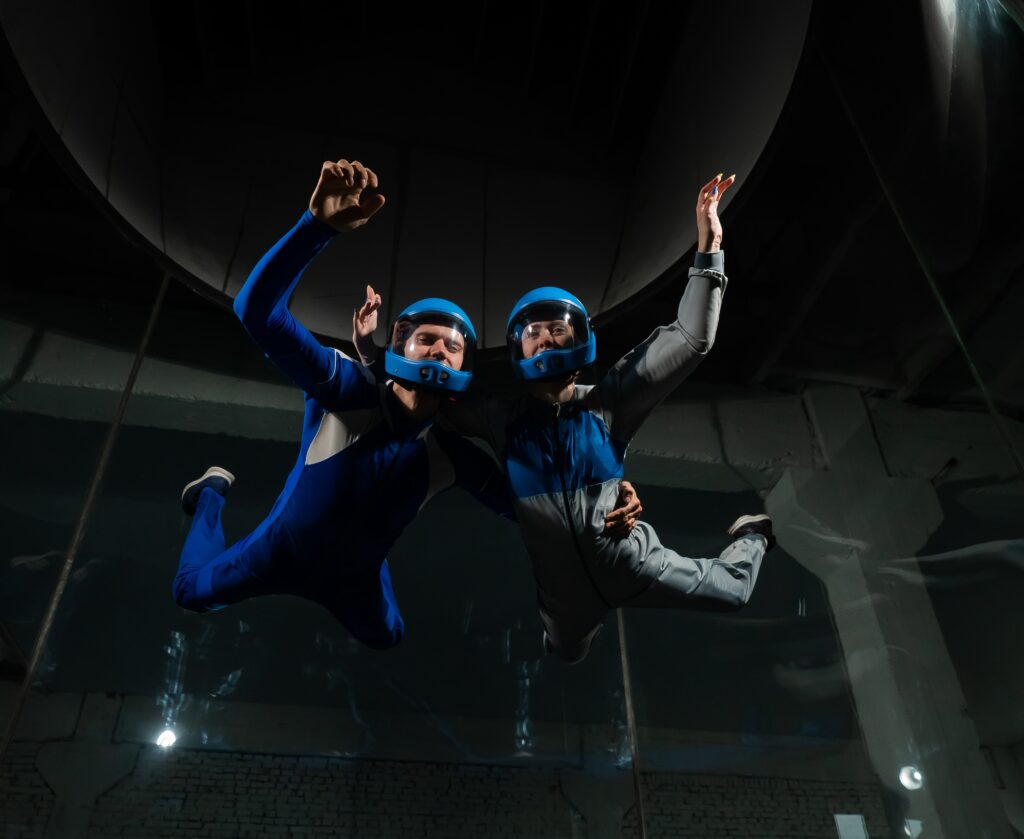
Wind Tunnel
Our wind tunnel is a combination of emotions and freedom. Feel the joy of flight, the touch of…
Learn more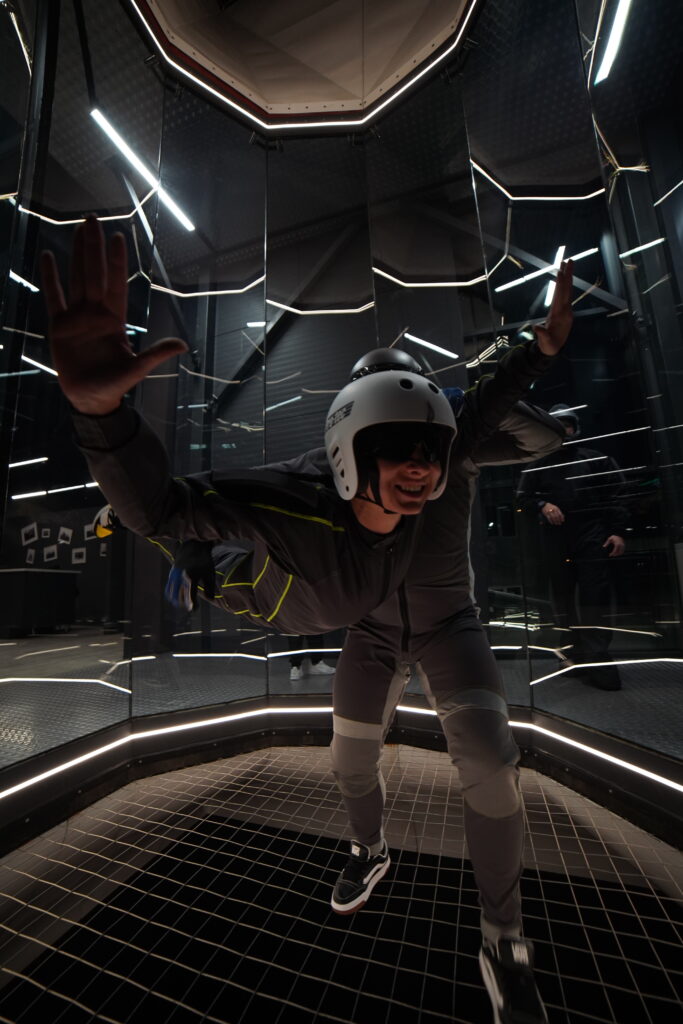
Wind tunnel for adults
Our wind tunnel is a space where freedom and vivid emotions come together. Feel the true delight of…
Learn more
Corporate wind tunnel
Our wind tunnel is a modern solution for corporate leisure and team building that combines vivid emotions with…
Learn moreWhat wind speed is used in a wind tunnel
The wind speed in the tunnel — for skydivers and casual visitors alike — is not fixed. The operator adjusts it for each individual person. The speed depends on the person’s height and weight, their level of training, and their body position during flight.
For professional athletes, wind speeds of up to 250–270 km/h are used. For adults who simply come to fly, it’s up to 180–220 km/h. The wind tunnel is also available for children: they can enjoy the flight at wind speeds of up to 140–160 km/h.

How to fly in a wind tunnel – tips from our instructors
If you want to fly in a wind tunnel, it’s worth following the experts’ advice. It’s very simple, but by applying it in practice you’ll get the most enjoyment out of your time in the trainer. You need to:
- Relax. The main mistake beginners make is over-tensing their muscles. If the body is tense, it stops obeying you and starts spinning chaotically. Relax your back and limbs as much as possible, letting the air hold you up.
- Hold the correct position. You should lie on your stomach, arching your lower back slightly. Your chin should be lifted up and your arms bent at the elbows. Spread your legs and relax them.
- Always watch the instructor. You already understand that a wind tunnel works with wind — so it’s noisy in there and you won’t hear anything. All instruction and movement corrections are done through special hand signals.
- Dress properly. The best choice is a light sports outfit without a hood or laces. For footwear — sneakers or trainers that fit snugly on the foot. Before entering the trainer you’ll be given special gear.
Note! Any jewellery can be caught by the airflow. Earrings, rings or bracelets could injure you or damage the tunnel, so it’s best to leave them at home.
Instructors are there to help you. If you have any questions, feel free to ask the specialist. That way you’ll get the knowledge you need and let go of your fears.
Flying in a wind tunnel: are there any restrictions
A wind tunnel is free flight for everyone. Although the attraction is considered safe, there are some restrictions. These trainers are available to children from the age of 5. As for an upper age limit — there isn’t one. If you feel well, you can fly even at 70+.
There is also a weight limit: visitors weighing more than 120 kg cannot use the wind tunnel, as the attraction’s technical capabilities are limited.
People with health problems should not experiment. The attraction is not recommended for pregnant women or people with serious spinal injuries. If a guest has a pacemaker, that is a contraindication for flying. People with mental disorders should not attempt to fly either.
Please note! If the organisers notice signs of drug or alcohol intoxication in a guest, they will not be allowed into the trainer.
A wind tunnel for skydivers is a chance to truly feel like a “free bird” and enjoy the flight together with AIRMAN.
FAQ
I wear contact lenses. Can I fly in the trainer?
Yes. Before the flight you’ll be given special protective goggles.
Can photos be taken while I'm flying in the air on the attraction?
Your friends or family can take them through the transparent walls of the flight zone, from a special waiting area.
Is it easy to breathe in the tunnel?
If you listen to the instructor, it’s not difficult at all. The main thing is to breathe calmly and evenly, mainly through your nose. There’s no need to panic or hold your breath.
How many minutes can you fly in the wind tunnel?
Beginners are usually given 2–3 minutes. It’s a serious test for the body, so that’s not a little.
Do your muscles get tired after the flight?
Yes, the next day you may feel sore, especially in the muscles of your back, neck, abs and glutes.
Article author

Other services
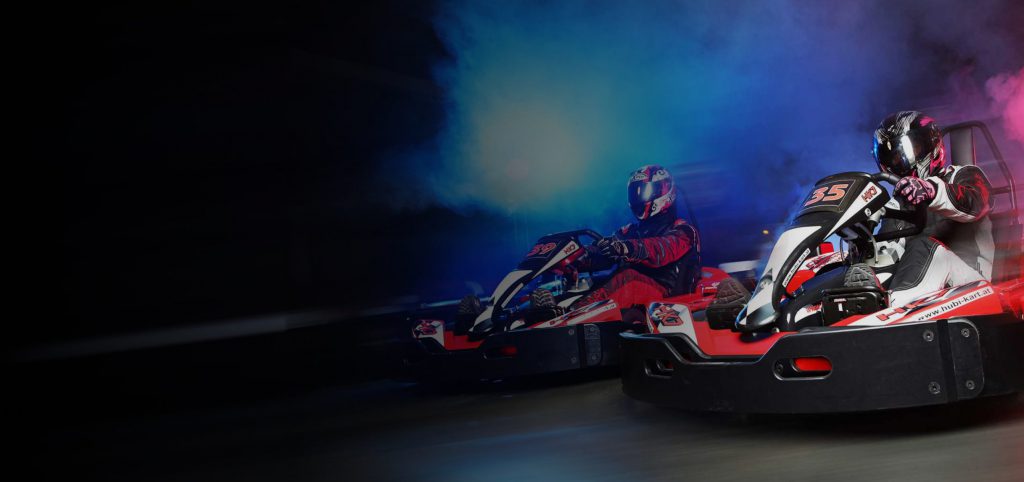
Karting in Lviv
Ninebot GoKart Pro – experience the thrill of being a real racer. The karting can be used by…
Learn more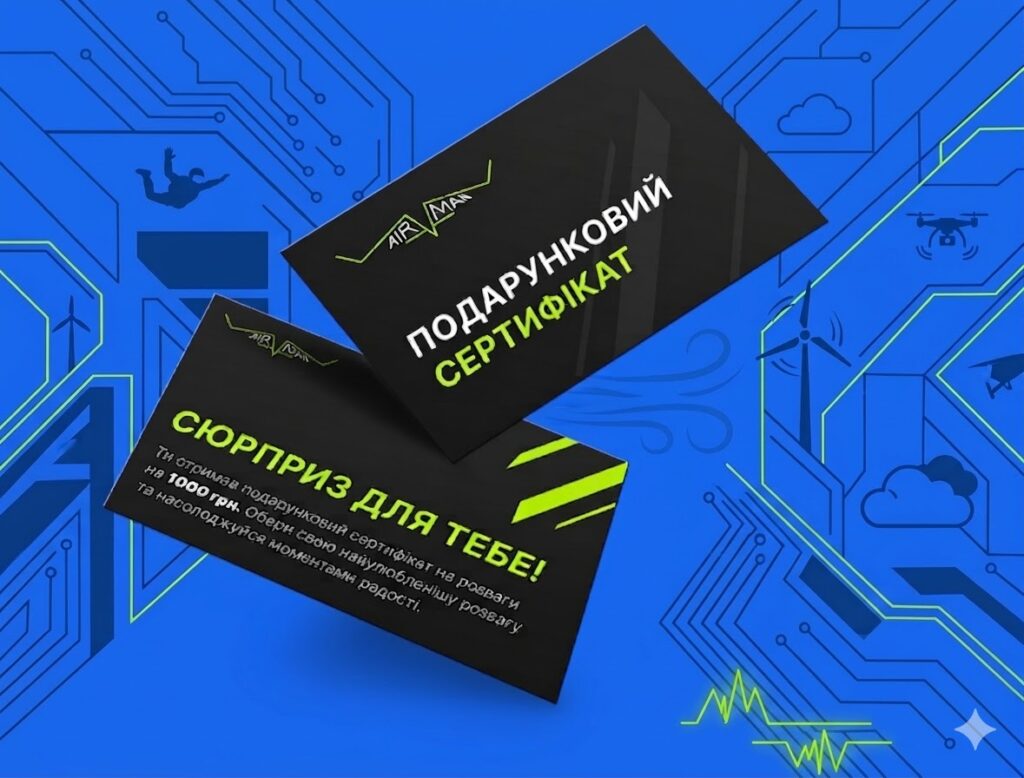
Gift certificates
Airman is the epicentre of your emotions! Give certificates for a wind-tunnel flight, karting races or flight-simulator sessions.…
Learn more
Wind Tunnel for kids
Our wind tunnel is a place where a sense of freedom and vivid emotions are born — for…
Learn more